
- Economia de Plataforma
- Trabalho Digital
- Condições de Trabalho
- Precarização
- Plataformas Digitais
The Platform Economy and the New Dynamics of Digital Work
Investigating work arrangements mediated by digital platforms, their impact on labor rights, and the prospects for worker organization in this new landscape.
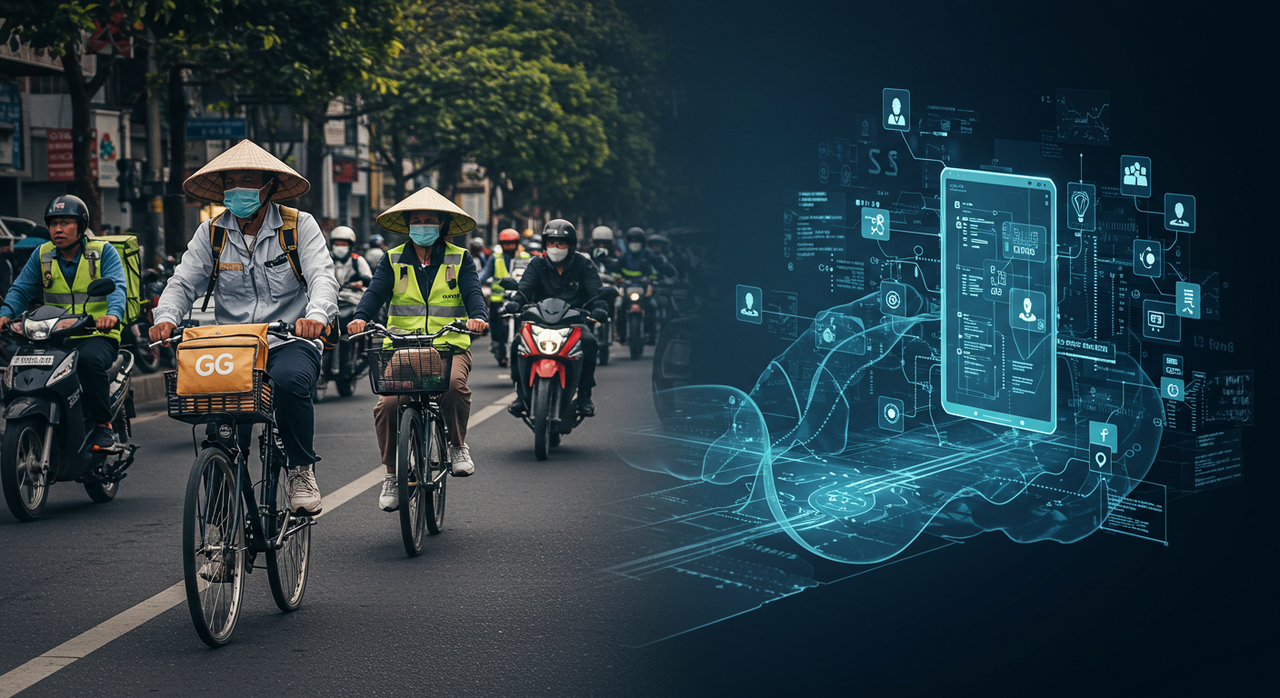
Introduction: This analysis of "The Platform Economy and the New Dynamics of Digital Work" seeks to foster an in-depth reflection on the transformations that technology imposes on the social structure and contemporary power dynamics. Starting from a careful observation of the material reality, we aim to reveal the complexities inherent in technological development and how it affects living conditions and social interactions in different global contexts.
Far from a simplistic or merely technical view, we understand that the platform economy and the new dynamics of digital work are a multifaceted field, where innovations, driven by human creativity and social needs, interact with existing economic and political structures. This article proposes to examine the implications of this dynamic, exploring both the constructive potential of technology and the challenges to its equitable and socially responsible use.
Historical Context and Foundations of Social Analysis
For a comprehensive analysis of "The Platform Economy and the New Dynamics of Digital Work," it is essential to use conceptual tools that allow us to understand reality in its totality and its transformations. The concept of the real subsumption of labor under capital through algorithms is fundamental to unraveling the logic underlying the observed phenomena. We will investigate how digital platforms, through their management algorithms, not only mediate but control and intensify the work process, dictating rhythms, prices, and conditions, in a new form of value extraction that resembles factory production but is spatially dispersed.
Historically, the development of society's productive capacities has always been intrinsically linked to transformations in social relations. From the first technological revolutions to the current digital age, we have observed how different social groups seek to direct the means of production to serve certain interests. In the context of "the platform economy and the new dynamics of digital work," this manifests itself through the expansion of informal and precarious work, now mediated by technology, as a strategy to reduce costs and make labor relations more flexible on the part of capital, in a context of weakening unions and protective labor legislation in many countries.
Analysis of Contemporary Manifestations and Their Complexities
In the current scenario, "The Platform Economy and the New Dynamics of Digital Work" presents itself with multiple, often complex facets. On the one hand, digital platforms offer a segment of workers flexible hours and autonomy in deciding when and how to work, in addition to representing an immediate source of income in contexts of high unemployment or to supplement other activities. On the other hand, the way this technology is implemented and distributed can generate the absence of basic labor rights (vacations, paid leave, social security), the intensification of the workday, low pay per hour actually worked, the transfer of risks and costs to the worker (vehicle maintenance, mobile data), and constant algorithmic surveillance.
We will examine concrete cases and data that illustrate this dynamic:
- Case Study 1: The situation of app delivery drivers in large urban centers, who face long hours, exposure to the risk of accidents and violence, low pay, and little or no social protection, while platform companies profit from the high demand for delivery services.
- Case Study 2: Attempts by app drivers and delivery workers to organize into cooperatives or associations to negotiate better conditions with the platforms or create their own alternatives, facing challenges such as the dispersion of the category and repression by companies.
- Data Analysis: Academic research that demonstrates the decline in average hourly income of platform workers over time, the increase in reports of uncovered work accidents, and the high turnover of workers in these apps, indicating the unsustainability of the model in the long term for the worker.
These examples demonstrate that technology is not an isolated factor, but an element that interacts deeply with existing social, economic, and political structures. The way "the platform economy and the new dynamics of digital work" develops and is applied reflects and, at the same time, influences these structures.
Perspectives for Socially Just Technological Development
Given the presented scenario, critical reflection is essential to guide action. It is important to identify paths to technological development that is socially just and promotes collective well-being. The pursuit of regulating work on digital platforms, guaranteeing labor and social security rights equivalent to those of other categories, establishing fair minimum wages, and limiting the power of algorithms in the management of work, with transparency and the possibility of contestation, is an important step to align technical progress with social progress.
Experiences of draft laws under discussion in several countries to classify platform workers as employees, the creation of specific social protection funds for this category, and the encouragement of cooperative platforms that are controlled by the workers themselves, demonstrate that it is possible to build another technological future, guided by the needs of the majority and not by restricted interests. Citizen participation and the strengthening of democratic institutions are crucial to drive these transformations and for "the platform economy and the new dynamics of digital work" to serve human emancipation and the construction of a more equitable society.
The construction of governance mechanisms and popular participation capable of directing scientific and technological development to meet collective interests is a central challenge. This implies not only regulating the uses of technology, but also fostering a broad and informed public debate about its direction and purposes.
Conclusion: Towards a Conscious and Transformative Appropriation of Technology
In summary, the analysis of "The Platform Economy and the New Dynamics of Digital Work" from a socially conscious perspective reveals that technology is a field of intense interactions and social, economic, and political implications. The promises of progress and universal well-being must be accompanied by a critical assessment of their impacts and who benefits from their advances. However, this same analysis shows us that technological development is not a predetermined destiny, and that the conscious and organized action of society can positively influence its course.
The task at hand is to promote a social and democratic appropriation of science and technology, putting them at the service of building a more just, egalitarian, and ecologically sustainable society. May this article contribute to critical reflection and to the strengthening of initiatives that seek a future where the platform economy and the new dynamics of digital work are, in fact, a tool for the common good and for the realization of human potential in its fullness.
References
- Wood, A. J., Graham, M., Lehdonvirta, V., & Hjorth, I. (2019). Good Gig, Bad Gig: Autonomy and Algorithmic Control in the Global Gig Economy. Work, Employment and Society, 33(1), 56-75.
- Scholz, T. (2016). Platform Cooperativism: Challenging the Corporate Sharing Economy. Rosa Luxemburg Stiftung.
- De Stefano, V. (2016). The rise of the ‘just-in-time’ workforce: On-demand work, crowdwork and labour protection in the ‘gig-economy’. International Labour Office, Conditions of Work and Employment Series, (71).
- Antunes, R. (2018). O Privilégio da Servidão: o novo proletariado de serviços na era digital. Boitempo Editorial.
- Lenin, V. I. (1916). Imperialismo, Fase Superior do Capitalismo. (Edition used to contextualize the expansion of new forms of exploitation).